Leave A Message
If you are interested in our products and want to know more details,please leave a message here,we will reply you as soon as we can.


Among natural stones, Portugal Cream Limestone has always been one of the most classic and widely used limestone materials.
It does not rely on dramatic veining like luxury marble, nor does it create an overly strong visual impact. Instead, its soft beige tone and natural texture make it a long-lasting choice for hotels, luxury retail stores, villa facades, and high-end residential projects.
In recent years, architecture and interior design have increasingly moved toward natural, calm, and timeless spaces. As a result, limestone materials like Portugal Cream have become more popular in both commercial and residential applications.
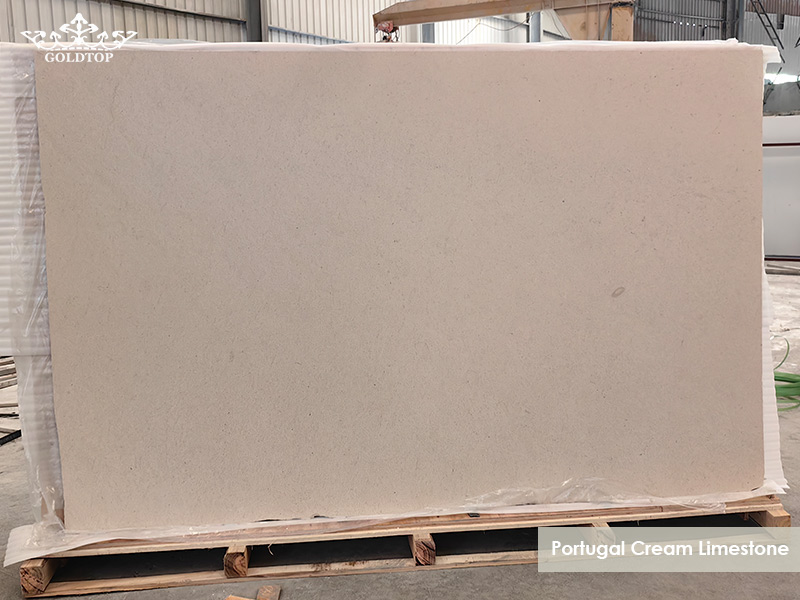
Portugal Cream is a natural imported limestone quarried in Portugal.
Its main component is calcium carbonate (CaCO₃). Because it was formed in ancient marine sedimentary environments, the surface often contains natural details such as:
◆ Fossil patterns ◆ Shell textures ◆ Small brown mineral spots ◆ Layered sediment textures
These natural characteristics are one of the reasons limestone feels more authentic and architectural compared to artificial materials.
The overall color is a warm beige tone — soft, balanced, and comfortable for large-scale applications without feeling too cold or too yellow.
| Feature | Description |
|---|---|
| Warm beige tone | Creates a soft, elegant, and welcoming atmosphere |
| Natural fossil texture | Subtle shell and sediment patterns add depth |
| Strong architectural feel | Ideal for large wall surfaces and facades |
| Excellent fabrication performance | Suitable for multiple surface finishes and custom processing |
| Versatile design compatibility | Works well with modern, minimalist, European, and natural styles |
| Moderate hardness | Easy for custom shaping and detailed fabrication |
| Natural and environmentally friendly | Free from artificial chemicals and formaldehyde |
| Timeless appearance | Softer and more enduring than heavily veined marble |
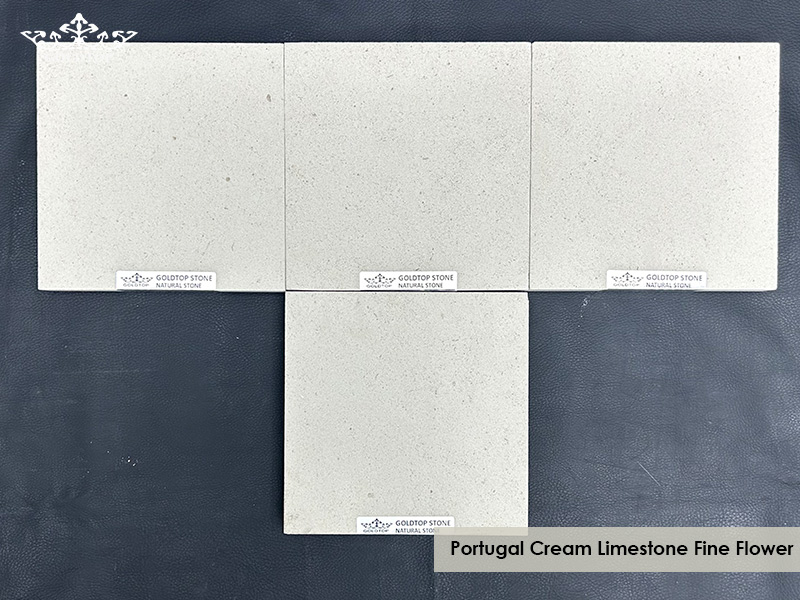
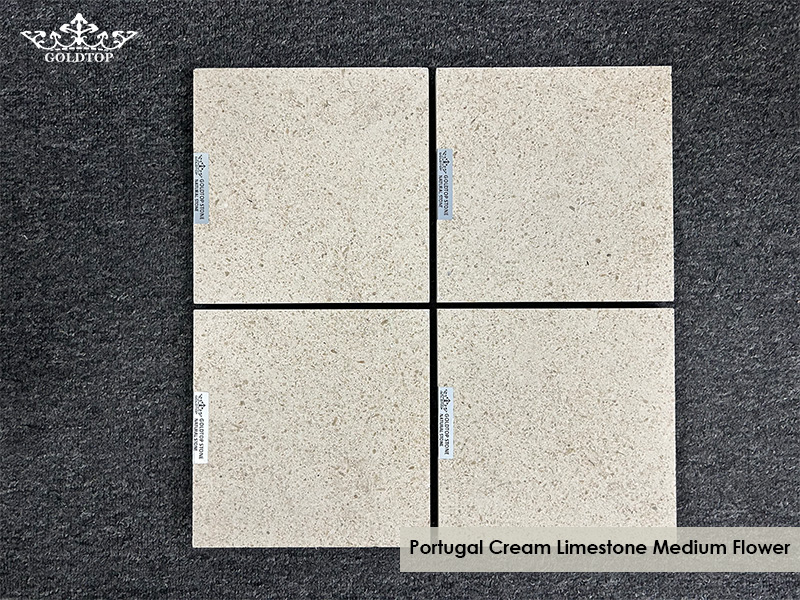
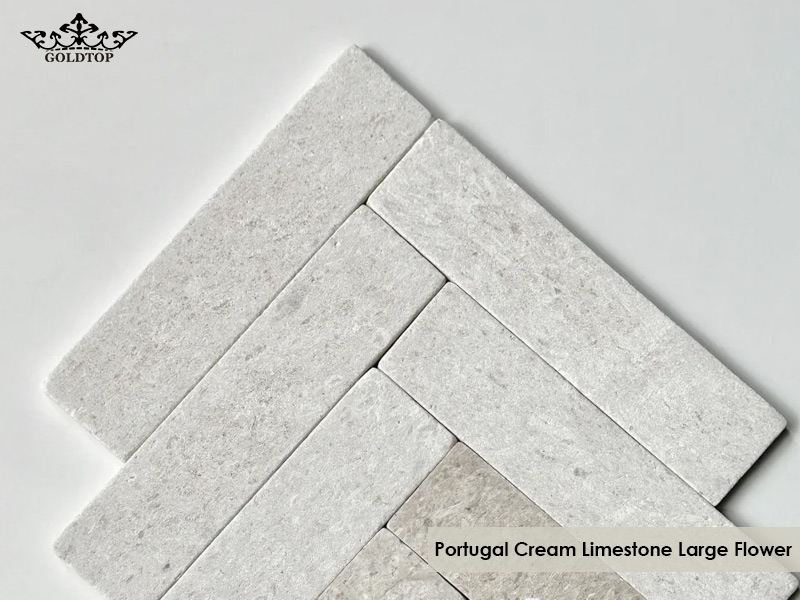
In the stone industry, Portugal Cream is usually categorized by the scale of its natural patterns.
| Type | Characteristics |
|---|---|
| Large Flower | More visible fossil movement and stronger texture variation |
| Medium Flower | Balanced appearance, commonly used in commercial projects |
| Fine Flower | Cleaner and more uniform look, ideal for minimalist spaces |
Different projects select different patterns depending on the architectural style.
For example:
◆ European-style buildings often prefer larger patterns
◆ Commercial spaces commonly use medium patterns
◆ Modern minimalist interiors usually favor fine flower selections
As a building-grade natural stone, Portugal Cream offers stable physical performance for architectural applications.
| Property | Data |
|---|---|
| Density | 2.47 g/cm³ |
| Water Absorption | 3.22% |
| Compressive Strength (Dry) | 130.64 MPa |
| Compressive Strength After Freeze-Thaw | 106.00 MPa |
| Flexural Strength (Dry) | 13.30 MPa |
| Flexural Strength After Freeze-Thaw | 11.70 MPa |
| Flexural Strength After Thermal Shock | 12.00 MPa |
| Slip Resistance (Dry) | 55.83 |
| Slip Resistance (Wet) | 67.83 |
These properties make it suitable for:
◆ Exterior facades ◆ Interior walls and floors ◆ Landscape paving ◆ Columns ◆ Custom architectural elements
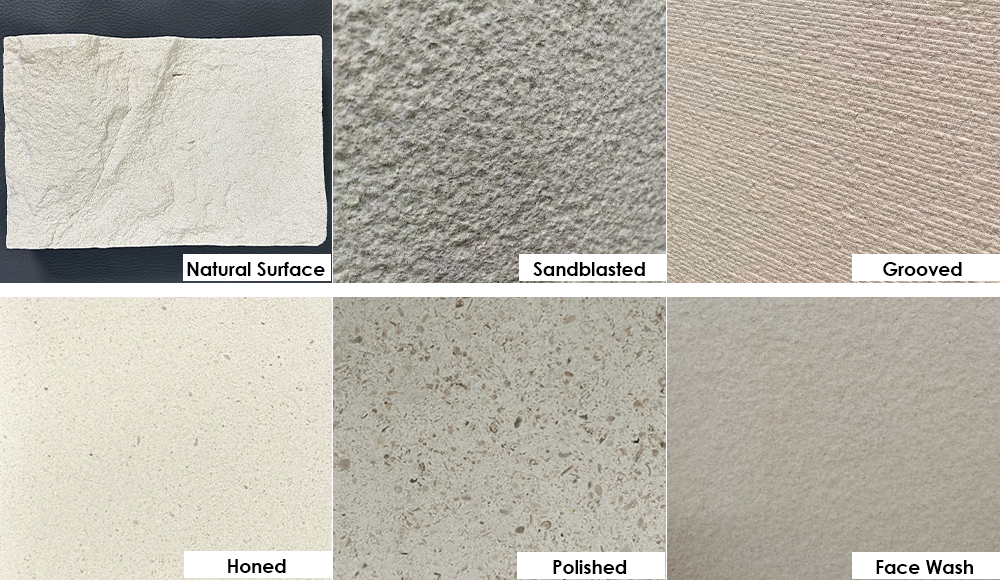
Portugal Cream Limestone has moderate hardness, making it highly suitable for textured surface processing and custom architectural finishes.
| Finish | Surface Effect | Common Applications |
|---|---|---|
| Polished | Smooth with reflective gloss | Hotels, luxury retail, feature walls |
| Honed | Soft matte finish | Floors, walls, residential interiors |
| Grooved | Linear textured surface | Exterior facades, architectural walls |
| Wave Surface | Strong light-and-shadow effect | Art spaces, feature walls, hospitality projects |
| Leather Finished | matte finish, slight graininess, feel of leather | Interior Walls & Floors, landscape projects, countertops |
| Sandblasted | Fine matte texture | Walls, landscape applications |
| Natural Surface | Raw natural stone texture | Exterior walls, garden features |
This flexibility in surface processing is one reason architects prefer limestone for facade applications.
It allows the material to create depth, texture, and shadow rather than relying only on color variation.
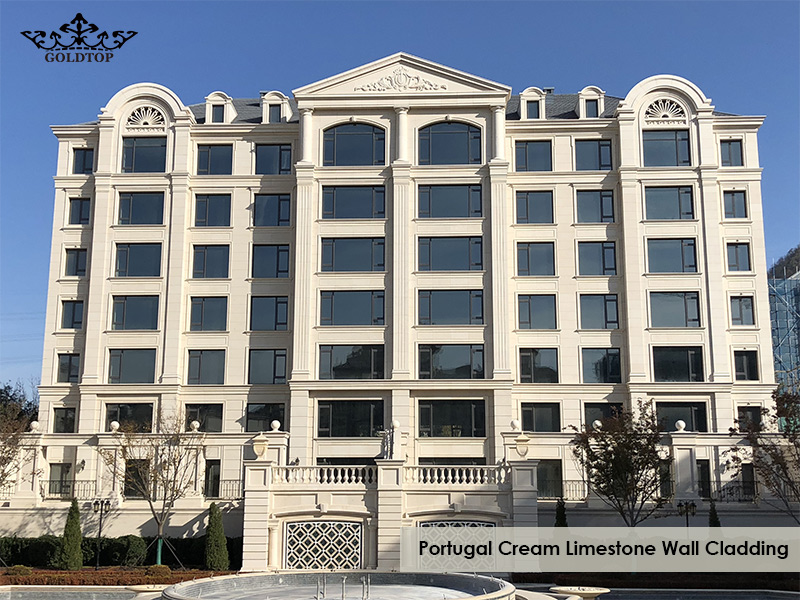
Portugal Cream has long been one of the most widely used limestone materials for exterior cladding.
Its large-scale appearance feels clean, balanced, and architectural without becoming visually overwhelming.
In one luxury villa project in the United States, Portugal Cream Limestone was used for:
◆ Exterior wall cladding ◆ Architectural columns ◆ Landscape structural elements
The project achieved a classic high-end European architectural look.
Under natural sunlight, the limestone presents a soft and warm appearance, which is one of the reasons many villa projects prefer it over darker or heavily patterned stones.
It also helps highlight architectural proportions and facade layering more naturally.
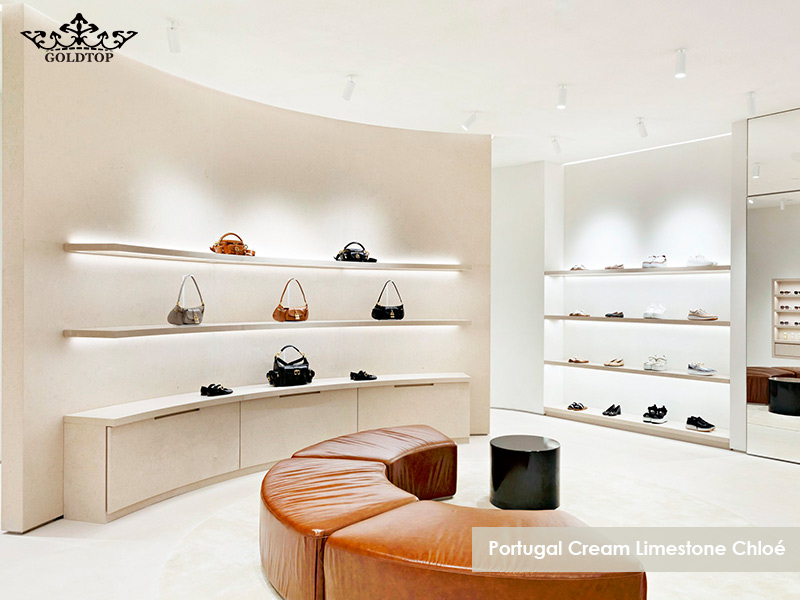
Portugal Cream Limestone is also widely used in luxury commercial interiors.
Chloé, founded in Paris in 1952, is known for its soft and elegant brand identity.
We supplied natural beige stone and custom stone fabrication for several Chloé boutique projects, including:
◆ Chloé HK Pacific Place ◆ Chloé HK Harbour City ◆ Chloé HK SOGO Causeway Bay
The stone was applied in:
◆ Flooring ◆ Wall cladding ◆ Display areas ◆ Stone furniture elements
Luxury retail spaces rarely use overly dramatic stone materials because they can distract from the products themselves.
Portugal Cream Limestone provides:
◆ Spatial consistency ◆ Warmth ◆ Quiet luxury ◆ A refined but understated atmosphere
making it especially suitable for:
◆ Luxury boutiques ◆ VIP areas ◆ Dressing rooms ◆ Lounge spaces
Beyond facades and retail spaces, Portugal Cream is also commonly used in residential and landscape projects.
Typical applications include:
◆ Flooring ◆ Feature walls ◆ Staircases ◆ Garden walls ◆ Courtyard paving ◆ Steps ◆ Outdoor landscaping
Compared to highly patterned stones, limestone blends more naturally with materials like:
◆ Wood ◆ Metal ◆ Glass ◆ Textured finishes
which makes it highly adaptable in contemporary architecture.
No. Portugal Cream is a natural limestone, not marble.
Yes. Portugal Cream is a mature and widely used facade material for hotels, villas, and commercial buildings.
Compared to granite, limestone has a higher absorption rate, so professional sealing treatment is recommended for architectural applications.
Absolutely. Especially fine flower Portugal Cream, which works very well in:
◆ Minimalist interiors ◆ Warm neutral spaces ◆ Natural-style architecture ◆ Contemporary residential design
Yes. Its moderate hardness makes it suitable for:
◆ Grooved finishes ◆ Wave surfaces ◆ Curved shapes ◆ Carving ◆ Custom architectural details
Portugal Cream Limestone is not a material that relies on immediate visual impact.
Instead, it is a stone that becomes more impressive when used across larger architectural surfaces.
Its value comes from:
◆ Architectural elegance ◆ Spatial warmth ◆ Material consistency ◆ Long-term timelessness
which is why it continues to appear in:
◆ Hotels ◆ Luxury retail stores ◆ High-end residences ◆ Villa facade projects
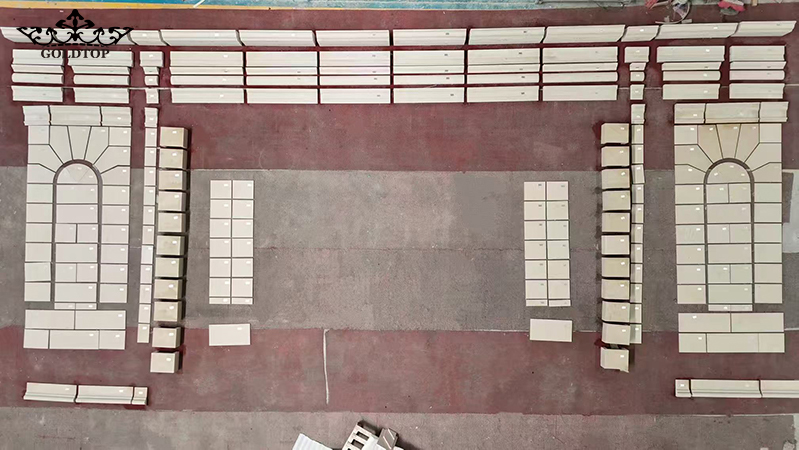
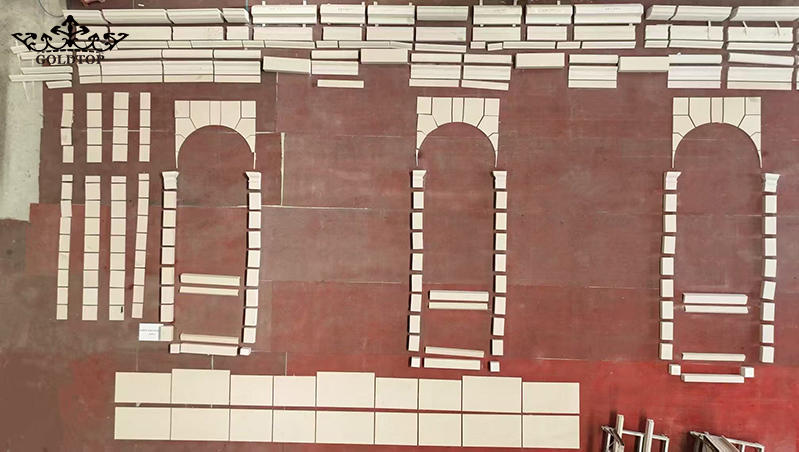
We provide:
◆ Portugal Cream slabs and cut-to-size materials
◆ Exterior facade fabrication
◆ Grooved and textured surface processing
◆ Custom stone furniture fabrication
◆ Project support and export packaging
◆ Global shipping services
Contact us for:
◆ Project references ◆ Slab photos and videos ◆ Finish samples ◆ Material recommendations ◆ Project quotations



 IPv6 network supported
 Your Language
 français
 Deutsch
 русский
 italiano
 español
 العربية
 日本語
日本語 한국의
한국의 中文
中文