Leave A Message
If you are interested in our products and want to know more details,please leave a message here,we will reply you as soon as we can.


Ceppo Di Gré limestone is a distinctive Italian natural stone known for its cool grey background and irregular pebble-like inclusions. Its natural aggregate texture resembles terrazzo or exposed-aggregate concrete, making it a popular choice for contemporary architectural and interior design projects.
For architects, contractors, and commercial project buyers, Ceppo Di Gré offers a distinctive material appearance for wall cladding, flooring, and custom decorative applications. With the right stone selection and fabrication methods, it can also be adapted for lightweight composite panels in luxury retail interiors.
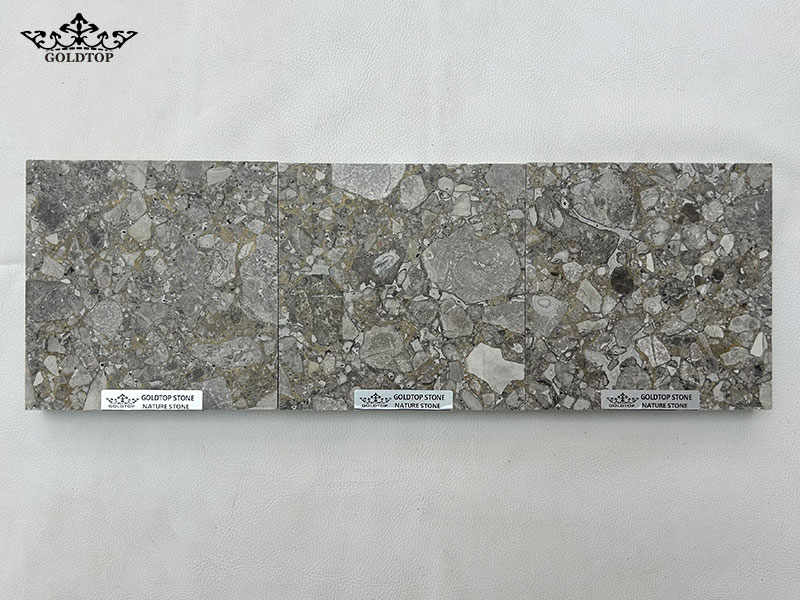
Ceppo Di Gré is a distinctive grey natural stone associated with the Lake Iseo area in Lombardy, northern Italy. Its characteristic appearance comes from stone fragments of different sizes embedded in a finer grey matrix.
Unlike conventional grey limestone with relatively uniform veining, Ceppo Di Gré features a brecciated or conglomerate-like structure. Angular and rounded fragments are scattered across the surface, with colors ranging from light grey and medium grey to dark grey and almost black.
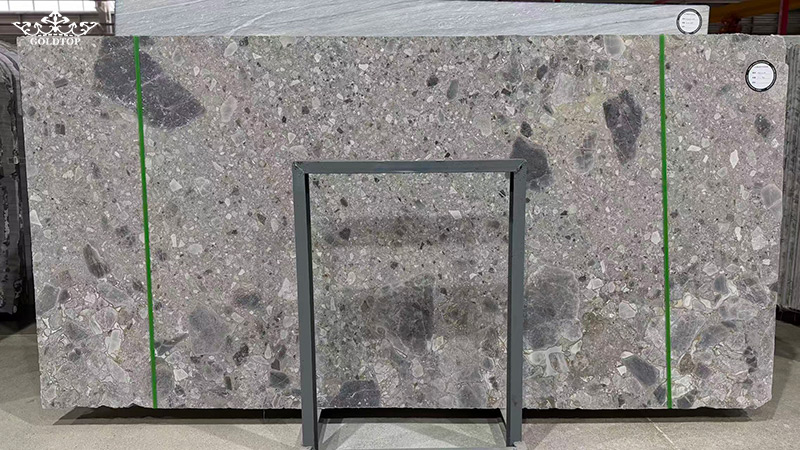
Key characteristics of Ceppo Di Gré:
Color: Cool medium grey with variations in lighter and darker grey tones.
Texture: Irregular stone fragments embedded in a fine-grained grey background.
Surface finish: Typically honed or matte, highlighting the natural texture rather than a high-gloss appearance.
Design style: Modern minimalist, industrial, wabi-sabi, and microcement-inspired interiors.
The combination of grey tones and naturally scattered inclusions gives Ceppo Di Gré limestone tiles a distinctive architectural appearance. They are particularly suitable for projects that seek the visual character of natural aggregate without relying on a manufactured pattern.
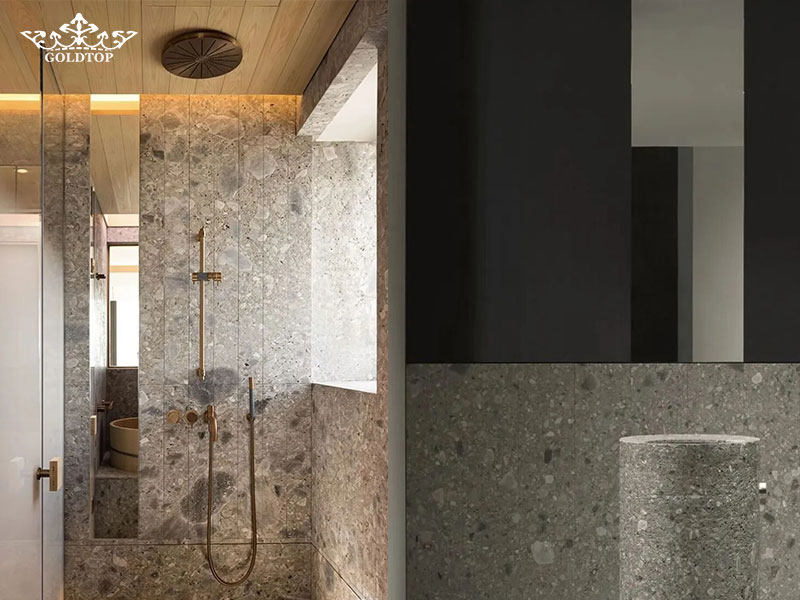
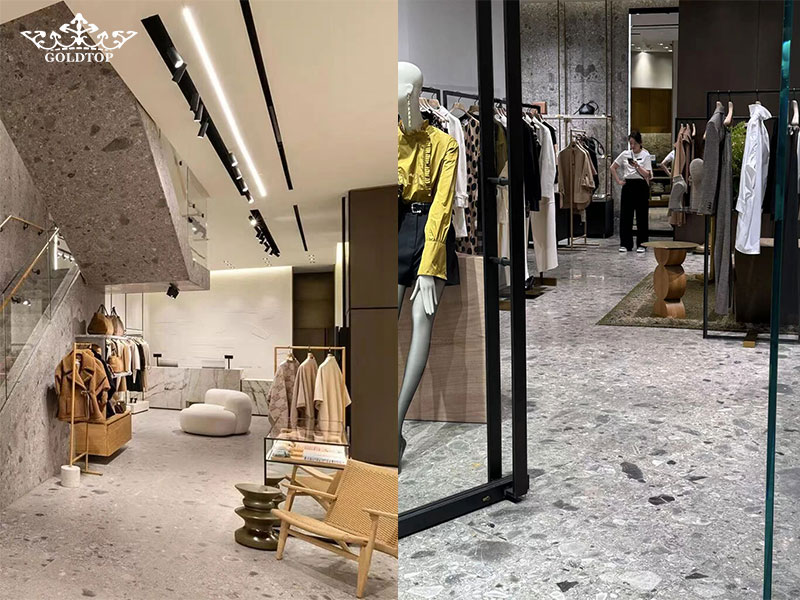
Ceppo Di Gré can be used for interior wall cladding, flooring, countertops, and bathroom finishes. The appropriate application depends on the stone's characteristics, thickness, surface treatment, and installation conditions.
| Application | Project considerations |
|---|---|
| Interior wall cladding | Suitable for feature walls, lobby interiors, and decorative wall finishes. |
| Grey limestone flooring | Select suitable tile thickness and a finish with appropriate slip resistance for the intended space. |
| Countertops and vanity tops | Evaluate porosity, staining risk, edge details, and maintenance requirements before specifying the stone. |
| Bathroom walls and floors | Confirm sealing requirements and select an appropriate finish for wet areas. |
| Luxury retail interiors | Suitable for decorative wall panels, display backgrounds, custom-cut elements, and composite panel applications. |
1. Surface finish
Ceppo Di Gré is generally specified with a honed or matte finish rather than a mirror-like polish. Depending on the material and project requirements, other finishes may also be available. Confirm the intended finish with an approved sample before production.
2. Natural pores and surface cavities
The aggregate structure may contain small pores and cavities. Depending on the specification, the stone may receive resin treatment or localized filling during processing.
For projects requiring an unfilled surface, this should be clearly stated before production. The natural cavities are part of the stone's appearance, but they can also affect cleaning, maintenance, and surface consistency.
3. Sealing and maintenance
Natural stone should be evaluated for water and oil absorption before installation. A suitable protective sealer can help reduce staining, but it does not make the surface completely stain-proof. Follow the sealer manufacturer's instructions for application and periodic maintenance.
4. Tile selection and layout
The size, color, and distribution of stone fragments can vary considerably from one tile to another. For large flooring areas or extensive wall cladding, reviewing the actual material and preparing a layout before cutting can help achieve a more balanced overall appearance.
Do not rely on a small sample alone to represent the final appearance of a large installation. Where visual consistency is important, confirm the material selection and layout with the supplier before production.
5. Thickness and installation requirements
Limestone is generally softer than granite and quartzite, so its suitability for flooring and other demanding applications should be assessed carefully. Tiles of 18 mm or thicker may be considered for certain flooring applications, subject to the project's loading, support, and installation requirements.
For outdoor applications, especially in regions with freeze-thaw cycles, water absorption and weather resistance should be evaluated before specifying the stone.
With appropriate material selection and fabrication planning, Ceppo Di Gré limestone tiles can provide a consistent design direction across a range of architectural surfaces.
Goldtop Stone supplied custom Ceppo Di Gré stone composite panels for a luxury retail store decoration project. The material was fabricated using a stone-and-aluminum-honeycomb composite structure, combining the natural appearance of Italian grey stone with a lightweight panel construction.
The fabrication process was carried out according to the project's drawings and surface requirements.
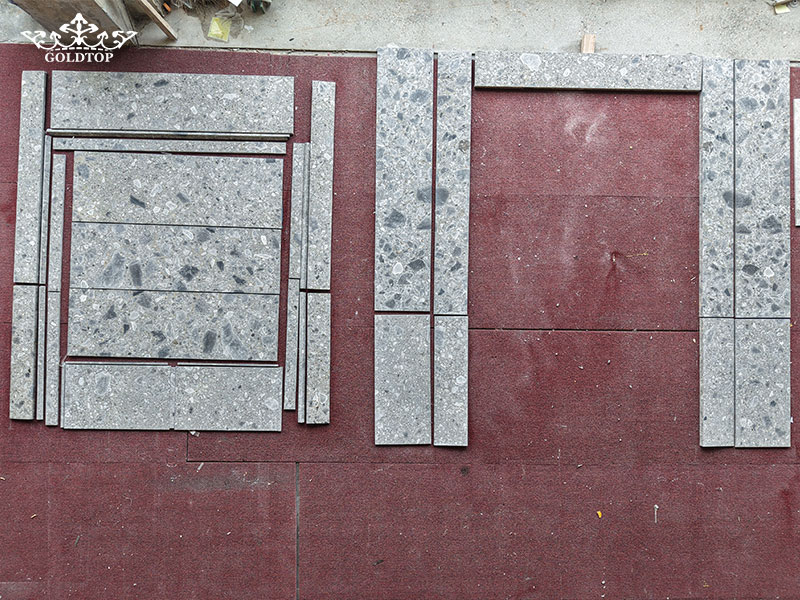
Our scope included:
Aluminum honeycomb composite panels: Fabricating Ceppo Di Gré stone panels with an aluminum honeycomb backing.
Drawing-based cutting: Processing the panels to the dimensions and shapes specified in the project drawings.
Matte surface finish: Maintaining the understated grey appearance of the natural stone.
Unfilled surface treatment: Preserving the requested natural, unfilled texture rather than filling the surface cavities.
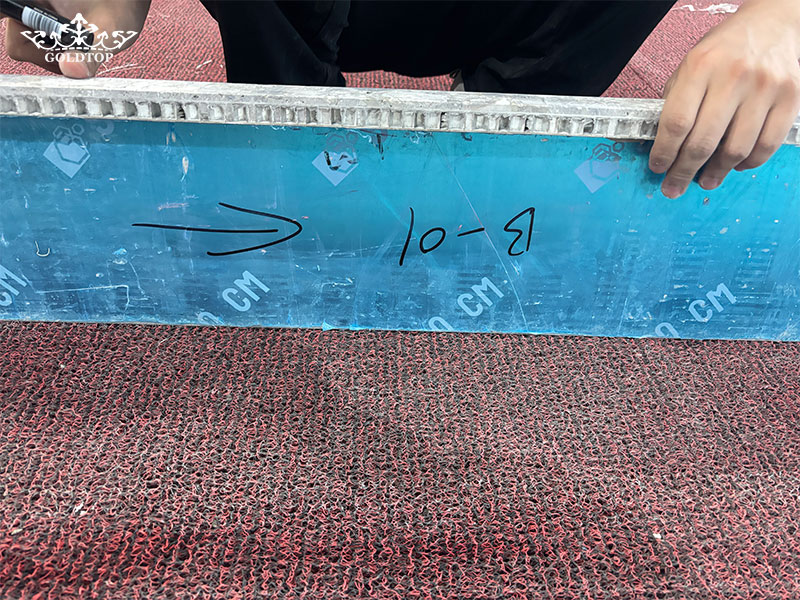
▲Ceppo Di Gre Limestone - Aluminum honeycomb composite panels
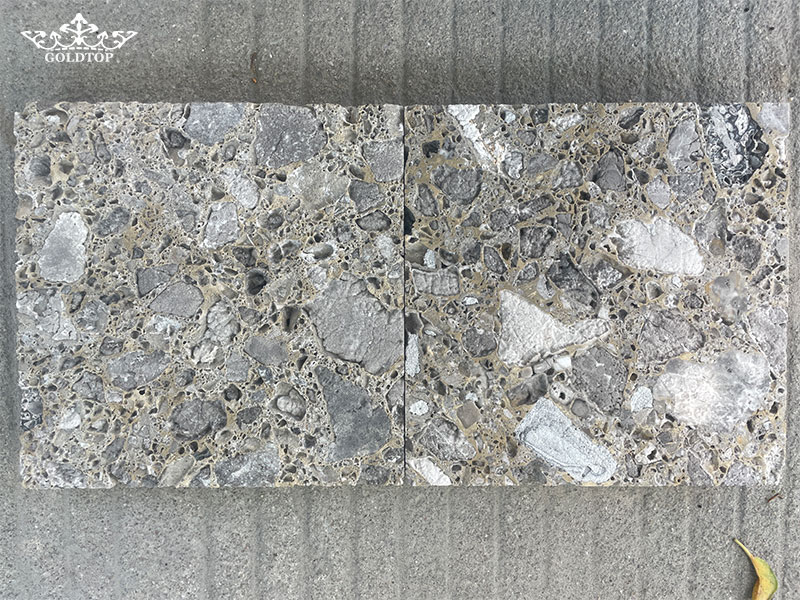
▲Water-Blasted Finish Ceppo Di Gre Limestone
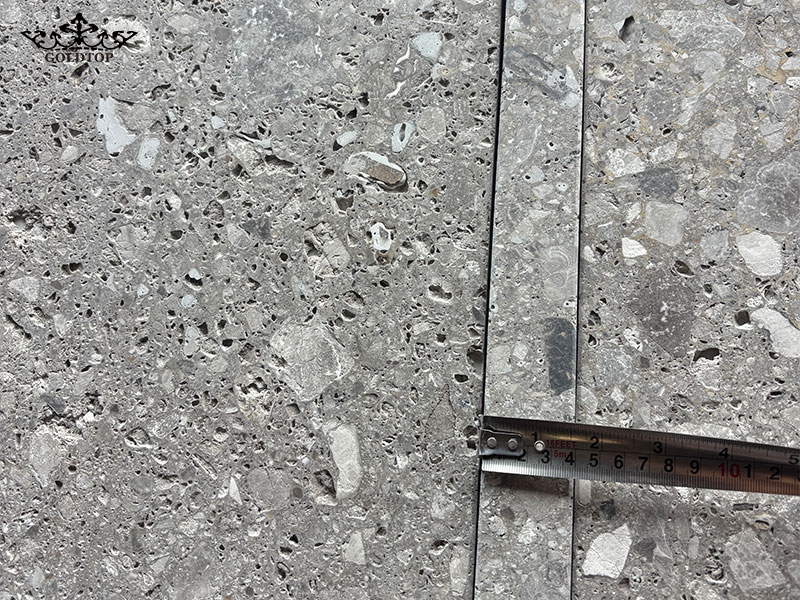
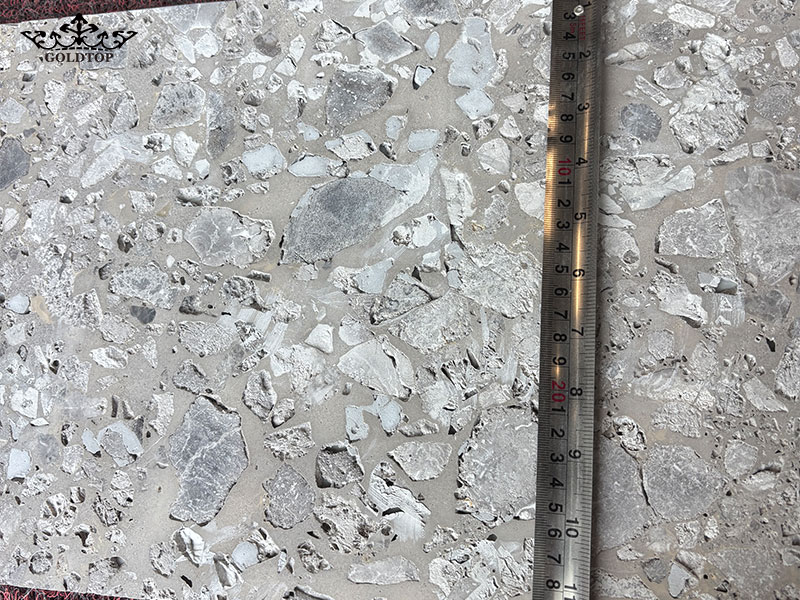
This project demonstrates how Ceppo Di Gré can be adapted for custom architectural applications beyond conventional stone tiles.
For stone-and-aluminum-honeycomb composite panels, stone thickness, panel dimensions, bonding systems, fixing details, and installation conditions need to be considered together. Coordinating these requirements before production helps ensure that the fabricated panels align with the project's design intent and installation needs.
At Goldtop Stone, we support project buyers, contractors, and interior design teams with natural stone selection and drawing-based fabrication. Our capabilities include custom-cut limestone tiles and stone-and-aluminum-honeycomb composite panels for commercial interiors.
Whether your project requires Ceppo Di Gré limestone tiles for wall cladding and flooring or custom composite panels for a luxury retail interior, our team can discuss the material specifications, dimensions, surface finish, and fabrication requirements based on your drawings.
Planning a Ceppo Di Gré limestone project?
Contact Goldtop Stone to discuss your project requirements and explore a suitable stone fabrication solution.



 IPv6 network supported
 Your Language
 français
 Deutsch
 русский
 italiano
 español
 العربية
 日本語
 한국의
 中文