Leave A Message
If you are interested in our products and want to know more details,please leave a message here,we will reply you as soon as we can.


Choosing the correct stone thickness is a critical factor in any stone application. Whether for marble slabs, granite tiles, countertops, or outdoor paving, thickness directly impacts strength, durability, safety, and long-term performance.
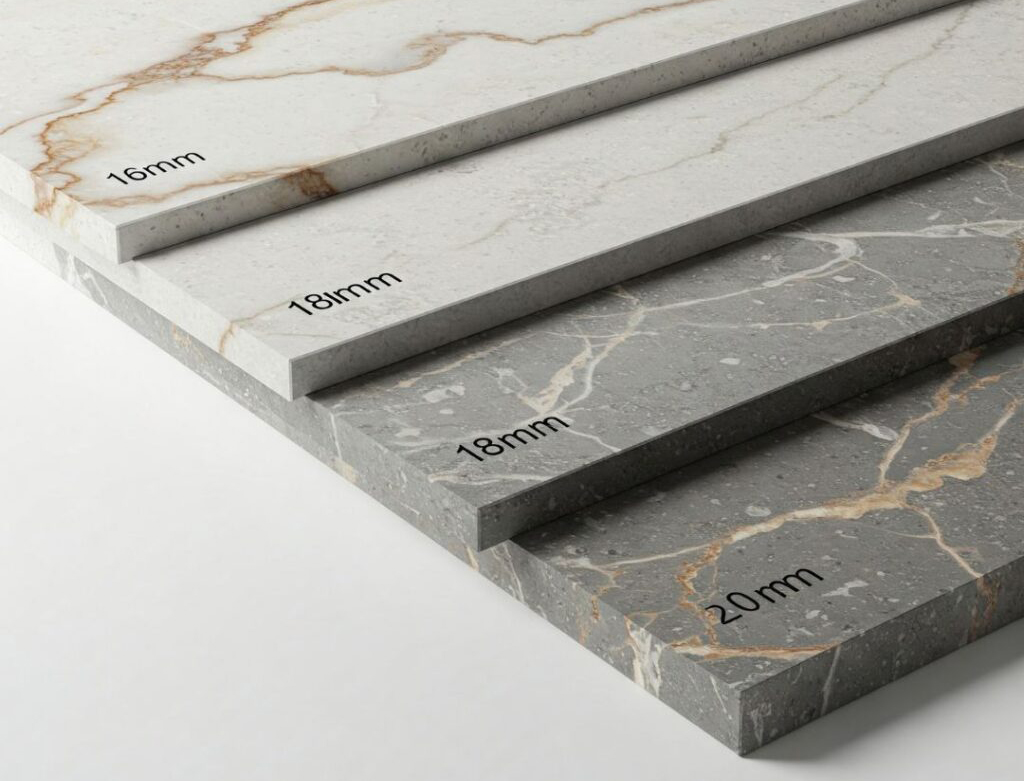
Stone thickness is not only a visual or cost-related choice—it plays a decisive role in:
Structural strength
Load-bearing capacity
Resistance to cracking and warping
Installation stability
Long-term durability and maintenance cost
Incorrect thickness selection often leads to cracking, adhesive bleeding, deformation, and premature failure.
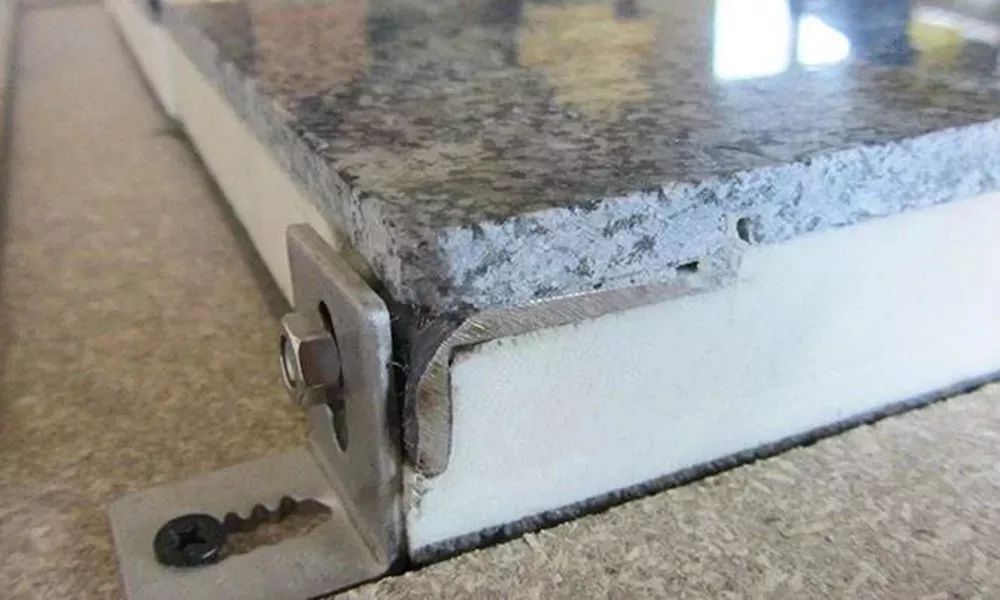
In general, thicker stone slabs provide higher compressive strength.
Thin marble slabs have lower resistance to pressure and impact
Standard thickness slabs (such as 18mm marble slabs) offer improved stability and durability
Extra-thick slabs are essential for high-load or outdoor environments
This applies to all stone types, especially in flooring, stairs, countertops, and exterior paving.
Natural stone may contain veins or micro-fissures. When slab thickness is below 16mm, the risk of cracking increases significantly during fabrication, transportation, or installation.
For light-colored stones such as marble floor tiles, thin slabs may allow cement or adhesive pigments to penetrate through the stone surface, negatively affecting appearance. Thicker slabs provide better protection against back-side contamination.
In high-load areas such as plazas, commercial floors, or driveways, thin stone slabs may deform or crack. A classic example is Tiananmen Square in Beijing, where 100mm-thick granite is used to withstand heavy pedestrian and vehicle traffic.
Thin stone slabs are more prone to warping or bending due to temperature changes, humidity, or uneven stress, especially in engineered stone products.

Outdoor stone tiles and slabs must resist weather, temperature changes, wind load, and impact.
Recommended minimum thickness:
Outdoor granite tiles: ≥ 20mm
Outdoor marble slabs: ≥ 25mm
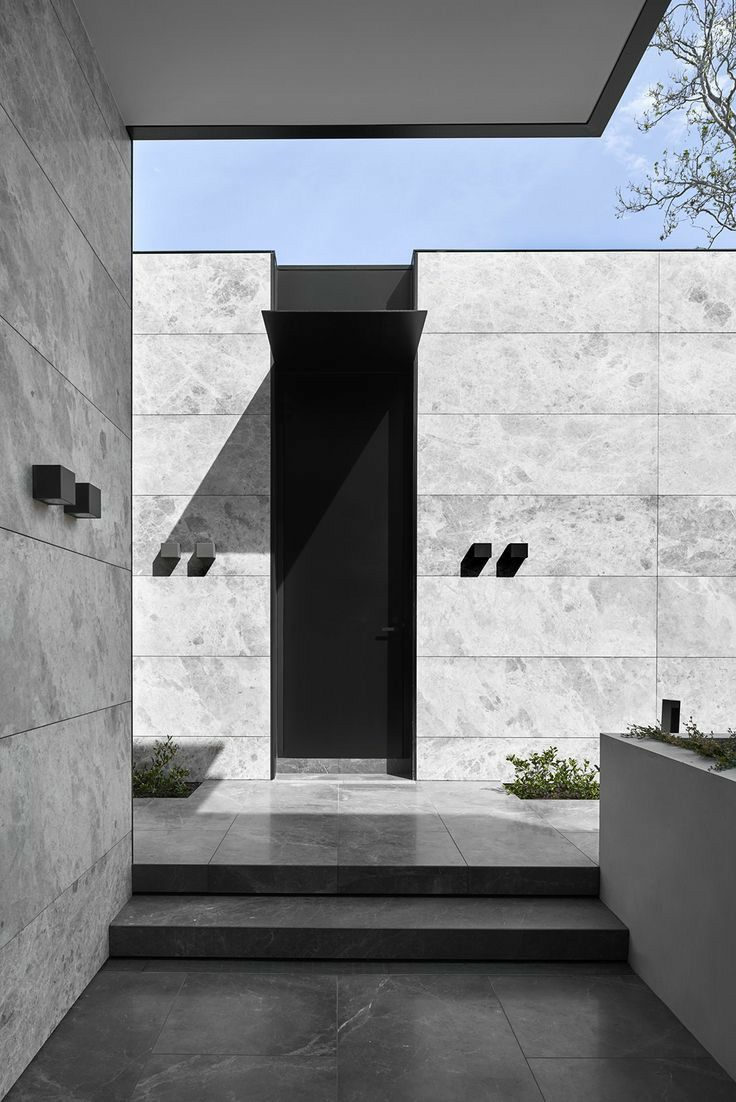
For indoor use:
Wall cladding: thinner slabs acceptable
Flooring (marble floor tiles): ≥ 18mm recommended
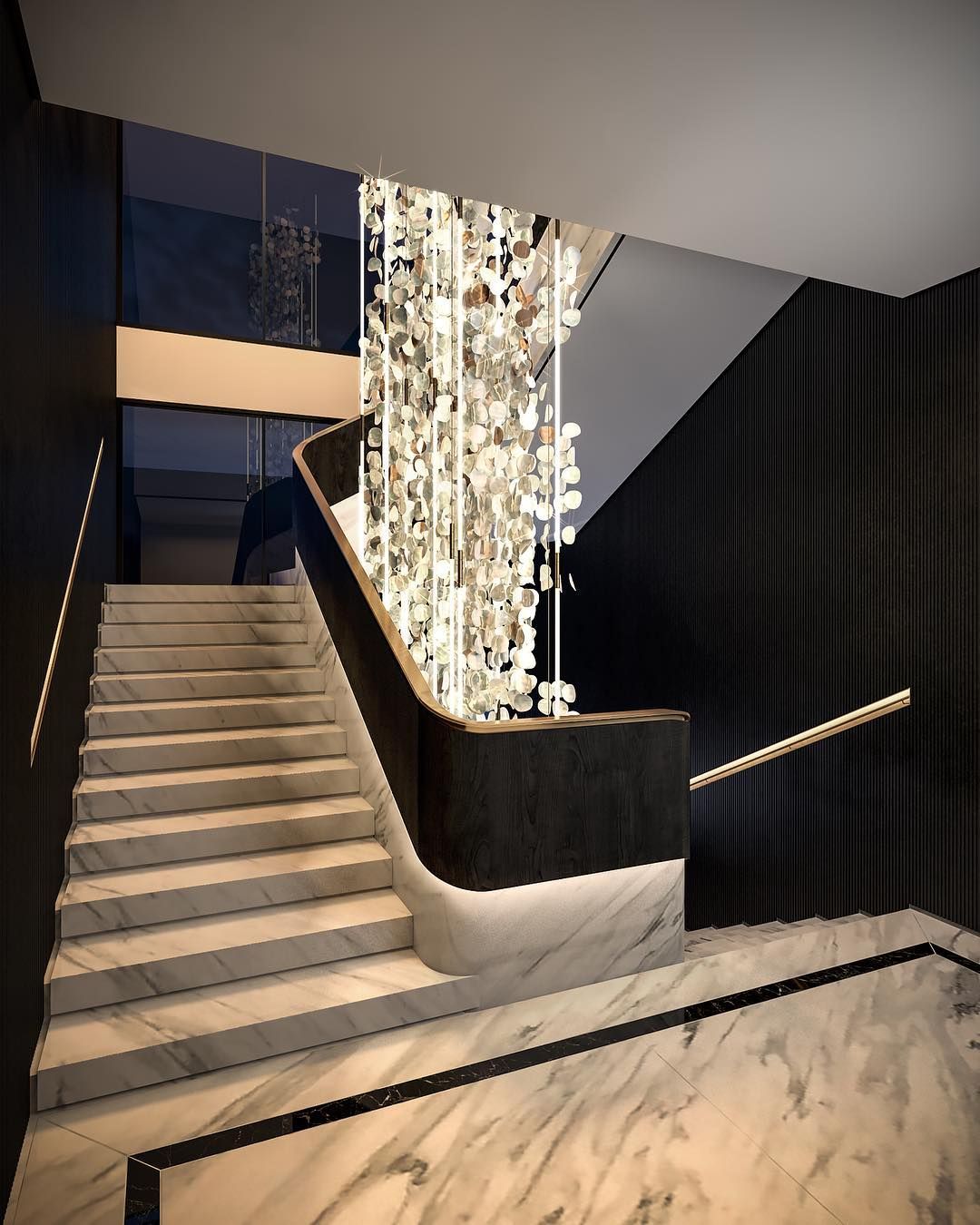
Marble generally has lower mechanical strength than granite. For the same application, marble should always be thicker. Marble countertops and vanity tops are recommended at 18mm or thicker, often with reinforcement.
Stair treads: ≥ 30mm
Cantilevered countertops: thicker slabs recommended
Cut-out slabs (sink holes, cooktops): increased thickness improves safety and longevity
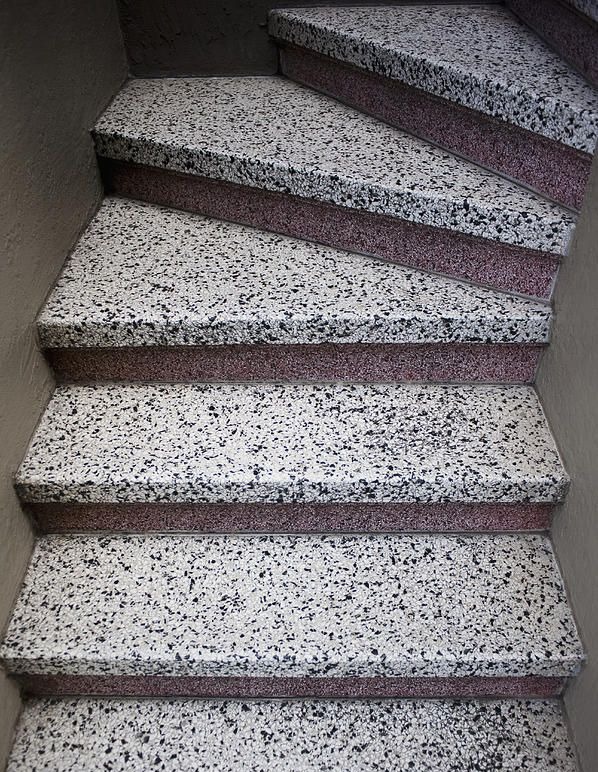
Selecting the right stone thickness requires balancing material type, installation method, and usage environment. While thin stone slabs may reduce initial cost, they increase long-term risks. Standard and thicker slabs ensure durability, safety, and visual stability.
Whether you are choosing marble floor tiles, outdoor granite tiles, or stone countertops, proper thickness planning is essential to achieve the ideal balance between aesthetics and performance.
Standard marble slab thickness is typically 18mm or 20mm, offering a good balance between strength, durability, and cost.
Not necessarily. Thicker stone provides more strength, but the optimal thickness depends on application, load requirements, and installation conditions.
Outdoor granite tiles should be at least 20mm thick to ensure durability against weather and impact.
Thin marble slabs below 16mm are not recommended for flooring, especially in high-traffic areas.
Discover a wide range of marble, granite, quartz, and engineered stone slabs available in multiple thickness options.
See how our stone materials are applied in residential, commercial, and large-scale architectural projects worldwide.
⇒Contact Us for Professional Advice
Need help choosing the right stone thickness for your project? Our expert team is ready to support you.



 IPv6 network supported
 Your Language
 français
 Deutsch
 русский
 italiano
 español
 العربية
 日本語
日本語 한국의
한국의 中文
中文